PositioningEntity mapping versus spreadsheets and versus a RAG index
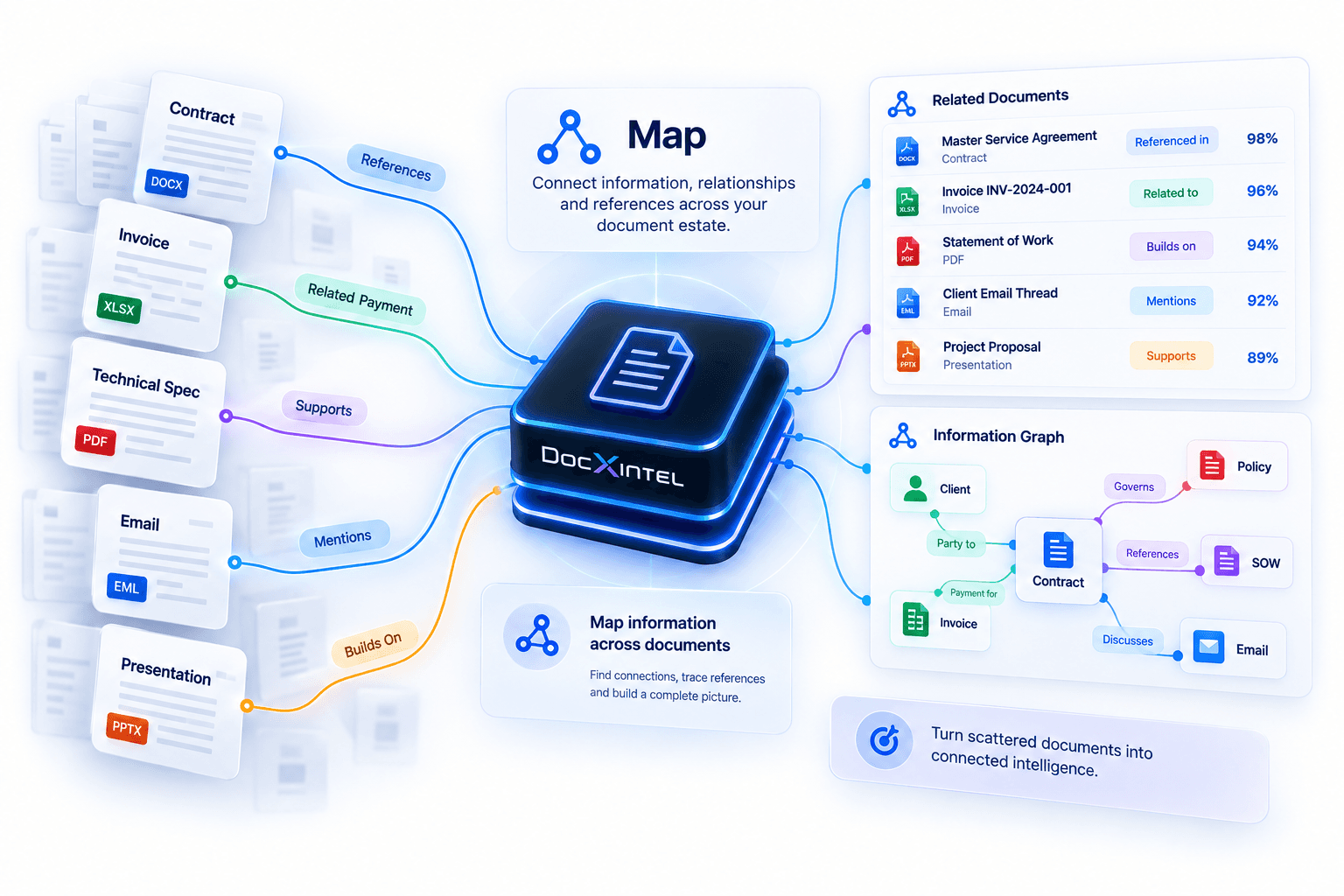
The two things organisations reach for instead are manual reconciliation and a vector index. One does not scale, and the other has no idea what an entity is.
Entity mapping versus spreadsheets and versus a RAG index| Criterion | Manual reconciliation in spreadsheets | RAG index with no entity model | DocxIntel |
|---|
| What the system reasons about | Rows a person typed in | Text chunks and embeddings | Typed entities, links and evidence |
|---|
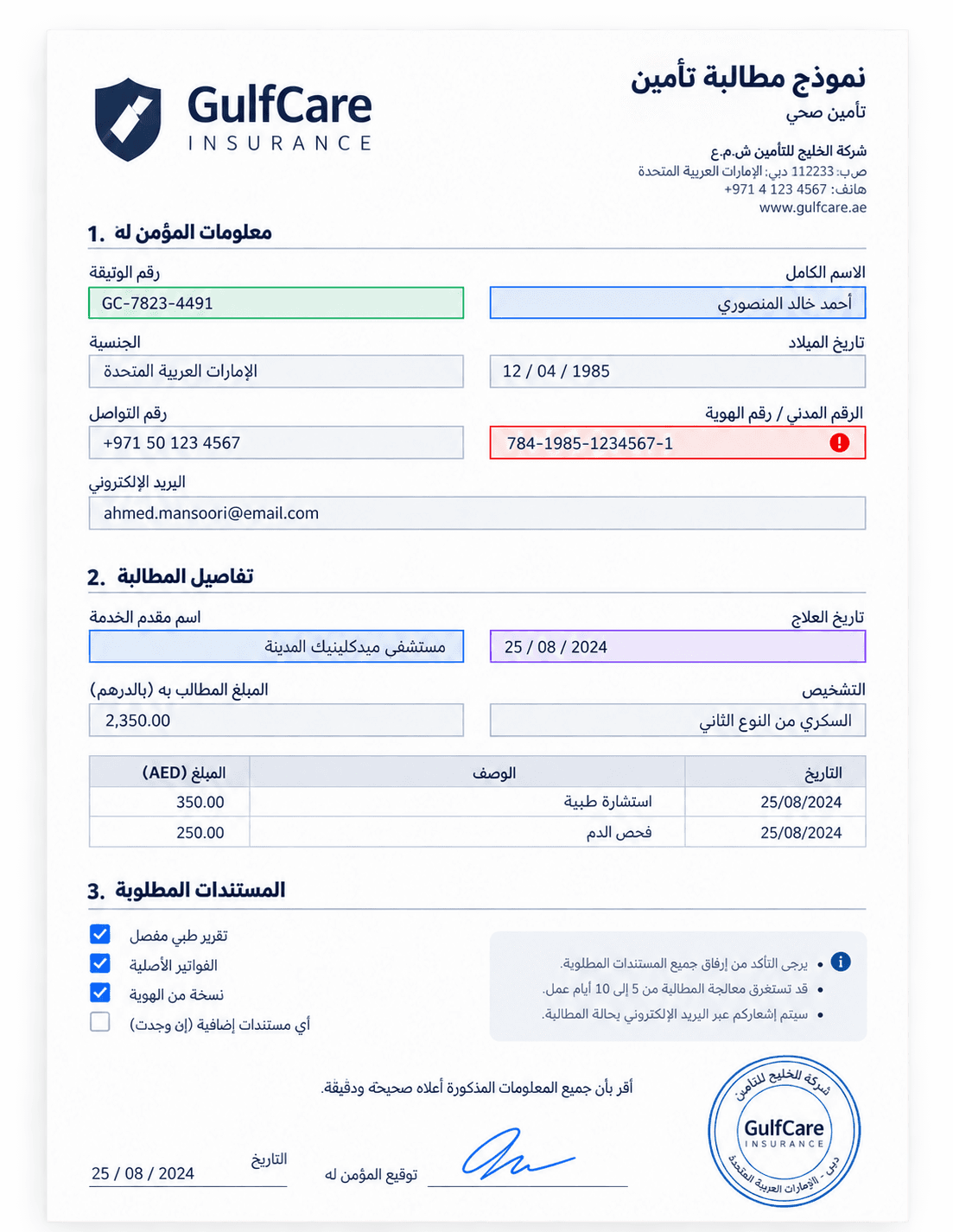
| Arabic name variants | Caught only if the reviewer notices | Similar text, no identity assertion | Resolved and confirmed against identifiers |
|---|
| Documents comparable at once | Whatever fits in an analyst working day | Whatever fits in the context window | The whole estate |
|---|
| Conflicting values between documents | Found late, if at all | Both retrieved, neither reconciled | Explicit mismatch finding with both sources |
|---|
| Near-duplicate detection | Depends on sort order and luck | High similarity, no verdict | Clustered with changed fields highlighted |
|---|
| Auditability of a decision | A cell with no provenance | A chunk, sometimes a page | Rules, thresholds, sources and coordinates |
|---|
| Where the result lives | A spreadsheet on a single laptop | A vector store with no relationships | A graph in your database, on your API |
|---|
| Where processing happens | Your desks | Often a hosted embedding and LLM API | Your infrastructure, air-gapped if required |
|---|
What the system reasons about
- Manual reconciliation in spreadsheets
- Rows a person typed in
- RAG index with no entity model
- Text chunks and embeddings
- DocxIntel
- Typed entities, links and evidence
Arabic name variants
- Manual reconciliation in spreadsheets
- Caught only if the reviewer notices
- RAG index with no entity model
- Similar text, no identity assertion
- DocxIntel
- Resolved and confirmed against identifiers
Documents comparable at once
- Manual reconciliation in spreadsheets
- Whatever fits in an analyst working day
- RAG index with no entity model
- Whatever fits in the context window
- DocxIntel
- The whole estate
Conflicting values between documents
- Manual reconciliation in spreadsheets
- Found late, if at all
- RAG index with no entity model
- Both retrieved, neither reconciled
- DocxIntel
- Explicit mismatch finding with both sources
Near-duplicate detection
- Manual reconciliation in spreadsheets
- Depends on sort order and luck
- RAG index with no entity model
- High similarity, no verdict
- DocxIntel
- Clustered with changed fields highlighted
Auditability of a decision
- Manual reconciliation in spreadsheets
- A cell with no provenance
- RAG index with no entity model
- A chunk, sometimes a page
- DocxIntel
- Rules, thresholds, sources and coordinates
Where the result lives
- Manual reconciliation in spreadsheets
- A spreadsheet on a single laptop
- RAG index with no entity model
- A vector store with no relationships
- DocxIntel
- A graph in your database, on your API
Where processing happens
- Manual reconciliation in spreadsheets
- Your desks
- RAG index with no entity model
- Often a hosted embedding and LLM API
- DocxIntel
- Your infrastructure, air-gapped if required
Retrieval-augmented generation is genuinely useful, and DocxIntel ships it as the Ask capability. The point is narrower: a similarity index is not an entity model, and asking it to reconcile records is asking the wrong component. Verify entity-resolution claims against current vendor documentation before making a decision.