DocxIntel home
DocxIntel, a product of BizfyLabs
by
BizfyLabs
  • Capabilities
    • Analyse

      Resolve layout, reading order, tables and handwriting

    • Identify

      Pull entities, fields and clauses with coordinates

    • Classify

      Sort document types and split multi-page packets

    • Map

      Link and reconcile entities across your estate

    • Modify

      Redact, mask and transform documents safely

    • Ask

      Query your documents and get cited answers

    • All six capabilities, one platform→
  • Deployment
  • Accuracy
  • Industries
    • Banking & Financial Services

      Statements, KYC files, and financial filings

    • Insurance

      Claims, policies, and underwriting documents

    • Government & Public Sector

      Records, correspondence, and regulatory filings

    • Healthcare

      Patient records, referrals, and lab reports

    • Legal & Compliance

      Contracts, filings, and case documentation

    • Energy & Utilities

      Engineering documents, contracts, and reports

    • Every regulated industry we serve→
  • Pricing
  • Docs
Book a Demo
Home
DocXIntel

Menu

    • All capabilities
    • Analyse
    • Identify
    • Classify
    • Map
    • Modify
    • Ask
    • All industries
    • Banking & Financial Services
    • Insurance
    • Government & Public Sector
    • Healthcare
    • Legal & Compliance
    • Energy & Utilities
    • Deployment models
    • Reference architectures
    • Sizing & throughput
    • What's in the box
    • Security posture
    • Documentation
    • Accuracy benchmark
    • Pricing
    • Proof of Value
    • Compare
    • About
    • FAQ
    • Contact Us
Industry — Government

Sovereign government document processing, Arabic-first and fully air-gapped.

Ministries and public authorities hold handwritten Arabic application forms, permits, court files and decades of scanned archive — on networks that frequently have no outbound route by policy. DocxIntel installs inside that perimeter with the model weights in the bundle and no foreign cloud dependency.

  • Runs air-gapped
  • Arabic-first
  • No foreign cloud
  • Unmetered archive conversion
Book a sovereign deployment briefing
See the deployment models
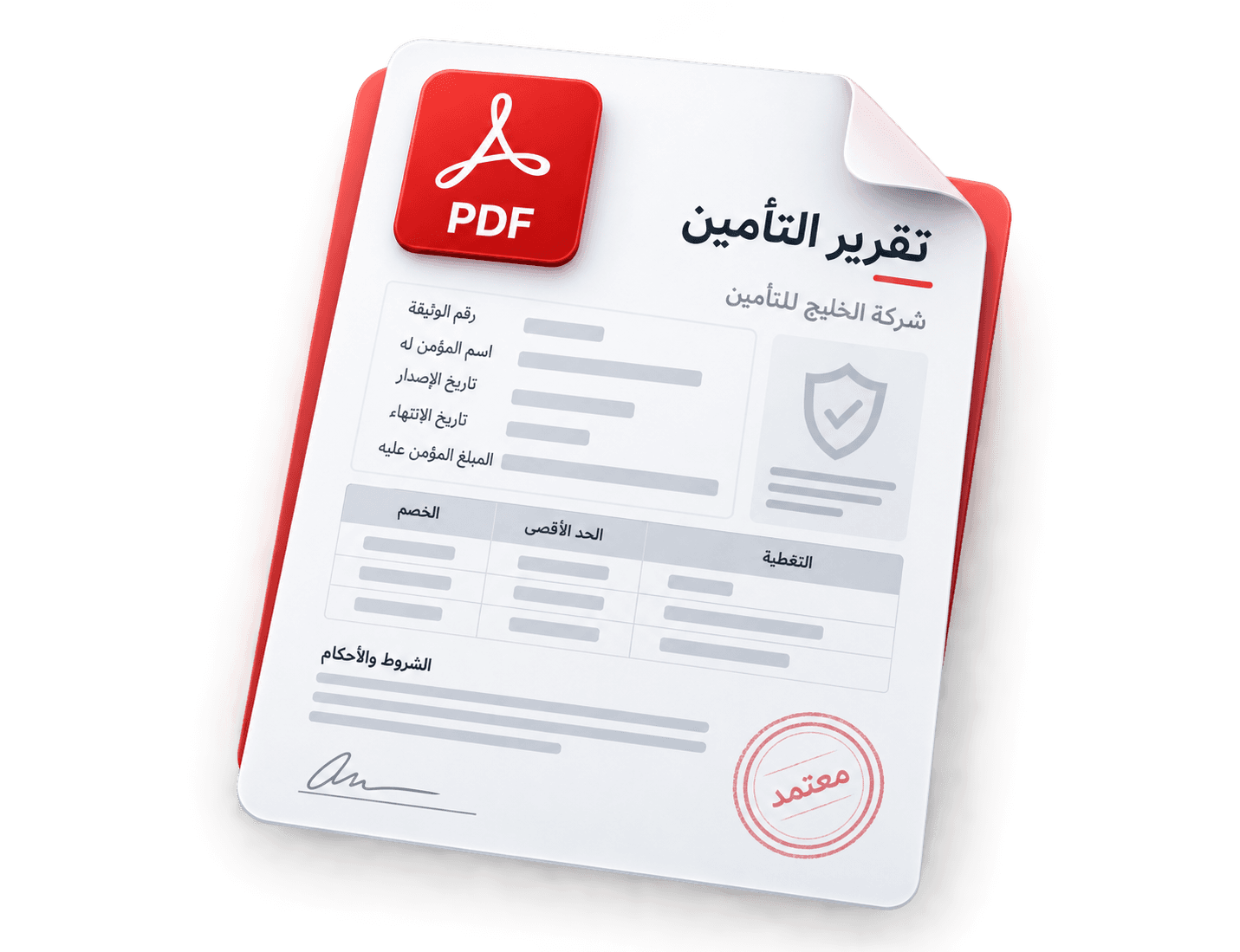
An Arabic government application form being read on-premise with fields extracted in right-to-left reading order
0 bytes
Leaving your network
air-gapped installs
Arabic-first
Reading order and numerals
including handwriting
99%
Field-level accuracy
on the published benchmark set
Unmetered
Archive pages converted
fixed annual licence

Accuracy is measured field-by-field against a human-adjudicated ground truth, not character-by-character. Handwritten Arabic forms are part of the published benchmark mix, and your own threshold is agreed in writing on your own documents before the Proof of Value begins.

What it processes

The public-sector documents and workflows that still run on paper

Public services digitised the front end first. The back office still receives handwritten forms at a counter, and the records room still holds the shelves nobody has been able to index.

Citizen application forms

Handwritten Arabic service requests are read into structured fields — applicant identity, service requested, dates, declarations and signatures — with uncertain entries flagged for a clerk.

  • Handwritten Arabic intake
  • Right-to-left reading order
  • Signature and stamp detection

Permits and licences

Permits, licences and their renewals are extracted and validated against the register, including expiry dates, conditions attached and the issuing authority.

  • Expiry and condition capture
  • Issuing authority validation
  • Renewal-cycle indexing

Historical archives and scanned records

Decades of scanned records — including poor microfilm scans, faded typescript and multi-generation photocopies — are converted into searchable, classified records.

  • Microfilm and faded typescript
  • Multi-generation photocopies
  • Backfile conversion at volume

Court and case files

Case files, judgments, pleadings and hearing records are classified, indexed by party and case reference, and made searchable with citations back to the page.

  • Party and case-reference indexing
  • Judgment and order extraction
  • Cited search across a file

Tender and procurement documents

Tender submissions, bid tables, technical compliance matrices and supporting certificates are extracted so evaluation panels compare structured data rather than PDFs.

  • Bid and pricing tables
  • Compliance matrix extraction
  • Certificate validity checks

Classification, retention and disclosure

Documents are classified into your own records categories on ingest, making retention schedules enforceable and disclosure searches answerable with citations.

  • Records-category classification
  • Retention schedule support
  • Redaction for disclosure
End to end

A records room converted into a searchable archive, without a page leaving the building.

Backfile conversion is the project every authority has costed and shelved, because metered processing makes the page count the budget. On a fixed licence the page count is a scheduling question.

  • Boxes are scanned in bulk to your own storage — mixed quality, mixed decades, mixed Arabic and English typescript and handwriting
  • Pages are quality-corrected first: deskew, dewarp, contrast normalisation and multi-generation photocopy recovery
  • Documents are separated from a continuous scan stream, so a 900-page batch becomes the records it actually contains
  • Each record is classified into your own retention categories, with the fields that identify it extracted and indexed
  • The archive becomes searchable in Arabic and English, with every answer cited to a page and a bounding box
  • When the models improve, the entire archive is reprocessed at no incremental licence cost — only compute time

This runs identically on an air-gapped network. Nothing about the workflow assumes an outbound connection exists.

Read how air-gapped deployment works
An air-gapped government deployment with documents, models and search contained inside the sovereign network
Rollout

How a public-sector deployment actually starts

Inside your own accreditation boundary, on your own documents, with your own team holding the keys throughout.

  1. 1
    Step 1

    Choose one service or one records series

    A single high-volume counter service, or one archive series, is a better first scope than a department. We ask for the intake your clerks find hardest — the handwritten forms, the faded archive, the poor microfilm — because that determines the real number.

  2. 2
    Step 2

    Fit the deployment into your accreditation boundary

    Network zone, isolation requirements, logging destinations and operator roles are agreed with your information assurance team before installation. Deployment evidence and data-flow documentation are provided for the accreditation file.

  3. 3
    Step 3

    Install offline from a signed bundle

    Containers and open-weight models are installed from media, on hardware you own, with no repository access required. Your team holds root, the encryption keys and the change window from the first day.

  4. 4
    Step 4

    Configure forms, records categories and retention rules

    Your form layouts, field schemas, records-classification categories and retention schedules are configured directly. No template library is used, and no sample document leaves the environment it was loaded into.

  5. 5
    Step 5

    Measure with your own staff adjudicating

    Your clerks and records officers adjudicate field-by-field, and the report shows per-field accuracy, confidence distribution and the review load you would actually staff. Miss the agreed threshold and you keep the report and owe nothing further.

  6. 6
    Step 6

    Scale to the backfile and to other services

    Adding another service, another archive series or millions more archived pages is a matter of GPU capacity and scheduling. The licence does not move because the page count did.

Reference

Government document types and the fields extracted from each

An indicative schema. The final field list is agreed against your own forms, records categories and retention rules during the Proof of Value.

Citizen service documents

Citizen application form
Applicant name in Arabic and English, Emirates ID number, contact details, service requested, submission date, declarations, signature and counter stamp
Permit or licence
Permit number, holder name, activity or purpose, issuing authority, conditions attached, issue and expiry dates, authorised signatory, official seal
Official correspondence
Reference number, sender and recipient entities, subject, date, action requested, deadlines, attachments listed, signature and seal

Case and procurement documents

Court and case file
Case number, court and chamber, parties and representatives, filing and hearing dates, claim type, orders made, judgment date and outcome
Tender submission
Tender reference, bidder legal name and trade licence, bid price and currency, validity period, delivery schedule, compliance matrix responses, certificates and expiry dates
Archived record
Record series, original reference, document date, subject, entities named, records category assigned, retention class, condition and legibility notes

Handling and provenance

Accepted inputs
Scanned and native PDF, JPEG, PNG, multi-page TIFF including Group 3/4 fax and microfilm scans, HEIC photographs, DOCX and XLSX
Scripts and numerals
Arabic and Latin scripts natively, right-to-left and bidirectional pages, Arabic-Indic and Western numerals, diacritics, handwriting
Attached to every field
Page number, bounding-box coordinates, confidence score and a stable element identifier that survives re-runs
Updates on isolated networks
Signed offline bundles installed by your own team in your own change window; no runtime repository access required

Deployment against a specific accreditation boundary is confirmed in writing during the Proof of Value against your actual network and document mix, not against a generic architecture.

Positioning

Government document processing: sovereign on-premise against metered cloud IDP

Cloud IDP platforms are competent software sold through hyperscaler marketplaces. For a sovereign authority the question is not capability but jurisdiction, and for an archive project it is arithmetic.

Government document processing: sovereign on-premise against metered cloud IDP
CriterionMetered cloud IDPIn-house manual entryDocxIntel
Where documents are readVendor cloud, often a foreign regionInside your buildingInside your building, on your hardware
Works with no outbound routeNot availableYesSupported by default
Foreign cloud dependencyYesNoNo
Handwritten Arabic intakeBest-effortReliable but slowFirst-class
Converting 2M archived pagesRoughly $25,000 to $600,000illustrative list-rate arithmetic at $0.0125 to $0.30 per pageYears of clerical effortNo incremental licence chargeGPU time only
Reprocessing after a model improvementCharged again per pageNot feasibleNo incremental charge
Chain of custody and audit loggingVendor portal logsManual registersYour own logging estate
Who holds the model weightsThe vendorNot applicableYou do

Where documents are read

Metered cloud IDP
Vendor cloud, often a foreign region
In-house manual entry
Inside your building
DocxIntel
Inside your building, on your hardware

Works with no outbound route

Metered cloud IDP
Not available
In-house manual entry
Yes
DocxIntel
Supported by default

Foreign cloud dependency

Metered cloud IDP
Yes
In-house manual entry
No
DocxIntel
No

Handwritten Arabic intake

Metered cloud IDP
Best-effort
In-house manual entry
Reliable but slow
DocxIntel
First-class

Converting 2M archived pages

Metered cloud IDP
Roughly $25,000 to $600,000illustrative list-rate arithmetic at $0.0125 to $0.30 per page
In-house manual entry
Years of clerical effort
DocxIntel
No incremental licence chargeGPU time only

Reprocessing after a model improvement

Metered cloud IDP
Charged again per page
In-house manual entry
Not feasible
DocxIntel
No incremental charge

Chain of custody and audit logging

Metered cloud IDP
Vendor portal logs
In-house manual entry
Manual registers
DocxIntel
Your own logging estate

Who holds the model weights

Metered cloud IDP
The vendor
In-house manual entry
Not applicable
DocxIntel
You do

Cost figures are our own arithmetic on publicly published list rates as of 2026, not vendor quotations, and exclude scanning and quality-assurance effort in all three columns. Verify against current vendor documentation before making a decision.


Compare the options in detail

Questions government CIOs and information assurance teams ask

The questions that decide whether document automation can be accredited at all, answered without hedging.

Yes, and that is the primary deployment model rather than a hardened variant. The models ship as open weights inside the deployment bundle and load from local storage, so an air-gapped install performs identically to a connected one. There is no licence check-in, no telemetry beacon and no fallback call when confidence is low — there is nothing outbound to firewall.

As a signed offline bundle your own team validates and installs during your own change window. Nothing is pulled from a vendor repository at runtime, so the update path does not require an outbound connection and does not depend on our availability. You choose when a version changes, and you can stay on a version indefinitely.

It is the case the platform was designed around. Arabic is a first-class script: right-to-left reading order, Arabic-Indic and Western numerals on the same page, diacritics, handwriting, and forms where an Arabic label sits above an English-transliterated name. Uncertain entries are flagged with their coordinates rather than guessed, so a clerk reviews the ambiguous minority instead of re-keying everything.

Nothing beyond the licence and the compute time. Because DocxIntel is not metered per page, a backfile conversion of millions of archived pages is a scheduling and hardware question rather than a budget approval. On a metered service the same project is charged per page and then charged again every time you reprocess after a model improvement.

No. There is no dependency on a hyperscaler region, a foreign API endpoint or a vendor-hosted model. The deployment runs on hardware you own, in a facility you control, with weights you hold — which is what sovereignty means in practice rather than in a contract clause.

Documents are classified into your own records categories on ingest, which is what makes retention schedules enforceable rather than aspirational. For disclosure and freedom-of-information work, the archive becomes searchable with citations, and responsive material can be redacted with the redaction applied to the underlying content rather than drawn over the top of it.

Keep reading

All industries→The six regulated sectors DocxIntel is built for, and the constraint they share.Healthcare→Prescriptions, pre-approvals and PHI that stays inside the hospital network.Legal→Case files, judgments, disclosure review and privilege-aware redaction.Classify→How documents are separated from a continuous scan stream and sorted into records categories.Deployment models→Air-gapped, private cloud, managed single-tenant or evaluation sandbox.Security architecture→Isolation, audit logging and key handling — the controls your accreditation file needs.

Start with the records room nobody has been able to index.

Thirty to forty-five days, fixed fee, deployed inside your own accreditation boundary on your own documents. The accuracy threshold and the conversion price are both agreed in writing before we begin.

Talk to an engineer
How the Proof of Value works
  • No per-page metering
  • Runs in your environment
  • Written accuracy threshold
DocxIntel Logo

A product of BizfyLabs

Document intelligence that never leaves your building. Analyse, identify, classify, map, modify and ask — inside your own infrastructure.

BizfyLabs on LinkedInDocxIntel documentationBizfyLabs

Product

  • Capabilities
    • Analyse
    • Identify
    • Classify
    • Map
    • Modify
    • Ask
  • Accuracy benchmark
  • Pricing
  • Proof of Value

Technical

  • Deployment models
  • Reference architectures
  • Sizing & throughput
  • What's in the box
  • Security posture
  • Model licences
  • Documentation
  • API reference

Solutions

  • All industries
  • Insurance & TPAs
  • Healthcare
  • Banking & finance
  • Government
  • Legal
  • Energy & logistics

Compare

  • Compare approaches
  • LlamaParse alternative
  • Docsumo alternative
  • On-premise document AI

Company

  • About DocxIntel
  • FAQ
  • Partners
  • BizfyLabs
  • Careers
  • Contact

© 2026 BizfyLabs FZC LLC. All rights reserved.

DocxIntel™ is a product of BizfyLabs FZC LLC.

  • Privacy Policy·
  • Terms of Service·
  • Data Processing Addendum·
  • Acceptable Use·
  • Model Licences·
  • Security·
  • Cookies

Registered in the United Arab Emirates. Delivery partner: Bizfy Solutions LLP, Indore, India.

DocxIntel